
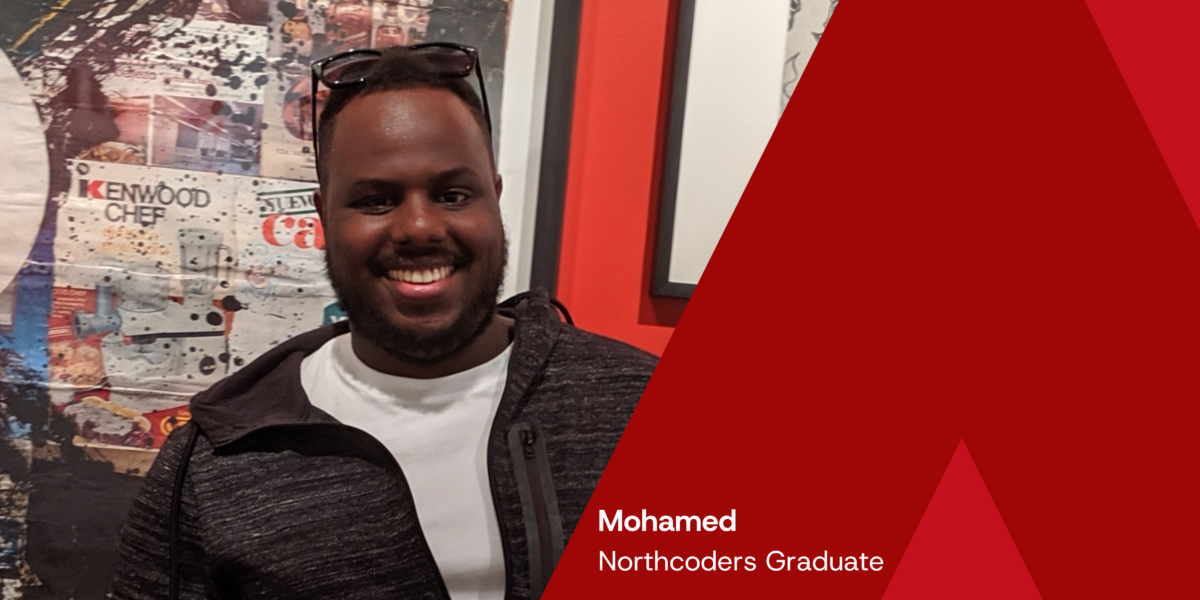
Throughout my three‑month journey on the Northcoders Engineering Enterprise bootcamp, the most important lesson I’ve learned is that software development is far from easy and that progress often depends more on resilience than raw talent. Coming from a law background and later working in data analysis, I expected the transition into software engineering to be challenging, but I didn’t anticipate just how transformative the experience would be.
My goal in joining the bootcamp was simple: to strengthen my understanding of core software development principles, especially Object‑Oriented Programming. Although I had been teaching myself to code from a young age, I knew I lacked the deeper fundamentals and the ability to apply different programming paradigms with confidence. The bootcamp gave me the structure, direction, and discipline I needed. Let me break down how the bootcamp was structured, starting from the beginning.
The Beginning
Stepping into the first day of the bootcamp, the atmosphere immediately confirmed everything we had been told: this was going to be intense, fast‑paced, and unlike any learning environment I’d experienced before. The morning opened with a welcoming presentation that laid out the structure of the course, the topics we’d be covering, and the expectations placed on us as aspiring software engineers. What stood out wasn’t just the content, but the honesty. The instructors were clear that the programme would challenge us, push us, and demand consistency from day one.
What I appreciated most in those early moments was the emphasis on mindset. We weren’t there to passively absorb information; we were expected to participate, experiment, make mistakes, and learn actively. Every lecture, every task, every discussion was framed as an opportunity to grow. That clarity helped me shift gears mentally. Instead of worrying about whether I knew enough, I focused on showing up with curiosity and determination. Looking back, that mindset became the foundation for everything that followed.
The Fundamentals
Once we settled into the rhythm of the bootcamp, we moved straight into the core foundations of software development. Since C# was our primary language, the first challenge was understanding what a programming language is, not just how to write code, but how computers interpret it, how instructions are executed under the hood, and why errors happen in the first place. It was a deep dive into the mechanics of software, and it forced me to rethink everything I thought I already knew.
The pace was fast, much faster than anything I had experienced through self‑teaching. Concepts like Object‑Oriented Programming, inheritance, and polymorphism arrived one after another, each building on the last. This was the part of the course I had been most excited for, and it didn’t disappoint. What made the difference wasn’t just the material, but the way it was taught. The instructors had a talent for breaking down complex ideas into clear, manageable steps. Instead of feeling overwhelmed, I found myself connecting the dots between theory and practice in a way I never had before.
I’ve always struggled to learn purely from books or tutorials, but the combination of guided explanations and hands‑on assignments changed everything. Each task reinforced the concepts we had just learned, and slowly, the abstract terminology of software development started to make sense. It was during this phase that I realised how much I had been missing by learning alone and how valuable structured teaching can be when you’re trying to understand foreign concepts.
The Teamwork
As the course progressed, our days settled into a clear rhythm: a focused lecture in the morning, followed by an afternoon task designed to put those concepts into practice. Most of these tasks were done in pairs, and this quickly became one of the most valuable parts of the bootcamp. Pair programming wasn’t just about writing code together, it was about learning how to communicate, share ideas, and approach problems from more than one angle.
We switched between the roles of “driver” and “navigator.” The driver typed, while the navigator guided the logic and spotted potential issues. It required clear communication and a willingness to explain your thinking out loud, which was very different from how I was used to working. Before the bootcamp, I had always coded on my own, following my own thought process without needing to justify it to anyone. Pairing changed that. I remember a moment early on when I was convinced my solution was the right one, only for my partner to suggest a simpler approach I hadn’t considered. It wasn’t a big dramatic moment, just a small reminder that another perspective can make a huge difference.
These sessions taught me how to break down problems more clearly, how to listen, and how to adapt my ideas when someone else had a better suggestion. Some tasks took longer than expected, and there were periods where both of us were stuck on the same bug for far too long. But working through those challenges together made the learning deeper and more memorable. It was during these pair‑programming sessions that I realised how important collaboration is in software development, and how much stronger solutions become when they’re shaped by more than one mind.
The Portfolio Project
The final stage of the bootcamp was our portfolio project, a two-week group assignment designed to simulate how real software teams’ work. We were placed into groups of five and given the freedom to choose the type of application we wanted to build. The goal wasn’t just to write code, but to learn how to plan, research, and collaborate the way a professional development team would.
We followed an Agile approach, breaking our work into small, manageable tasks and reviewing our progress each day. This structure helped us move quickly while still staying organised, and it gave us a clear sense of how software is built from the ground up. What stood out to me during this phase was how naturally we began applying the skills we’d learned throughout the bootcamp. Concepts that once felt abstract suddenly made sense when used in a real project.
Working as a team also came with its challenges. We had to decide which features were essential, which ones could wait, and how to handle unexpected delays. There were moments where we had to rethink our approach or adjust our priorities, but those decisions were part of the learning process. It taught us how to communicate clearly, divide responsibilities, and support each other when things didn’t go as planned.
By the end of the project, we had built something we were genuinely proud of. More importantly, the project showed us what it feels like to contribute to a shared codebase, solve problems together, and build software in a structured, collaborative environment.
The Support
A major focus of the bootcamp, beyond the technical training, was preparing us for life after graduation. Northcoders put a strong emphasis on employability, and it was clear that they wanted us to leave not just as capable developers, but as confident job candidates. Each student was assigned a dedicated career coach, and their support became a core part of the experience.
Our coaches helped us refine our CVs, improve our LinkedIn profiles, and organise our GitHub repositories so they reflected our skills more clearly. They also guided us through the obstacles of the job market, how to approach applications, how to prepare for interviews, and how to talk about our projects and experience in a way that made sense to employers. What I found especially helpful was how practical their advice was. Instead of generic tips, they gave us clear, actionable steps we could apply immediately.
This support made a noticeable difference. It helped me understand how to present myself professionally and gave me the confidence to start navigating the job search on my own. Knowing that there was a team dedicated to helping us transition into the industry made the whole process feel far less overwhelming.
The Graduation
During the last week of our bootcamp, each group had the chance to present their portfolio project, not only to the instructors but also to industry guests from companies like Northrop Grumman, Nology, and others. It was a great opportunity to talk through our ideas, explain our technical decisions, and show the work we were genuinely proud of. After the presentations, we spent time discussing the different tech stacks each team used, the challenges we faced, and the lessons we learned along the way. It was a relaxed but meaningful way to close the technical side of the course.
The rest of the week focused on preparing us for the job market. Our career coaches ran sessions on applications, interviews, confidence building, and how to talk about our projects in a clear and professional way. These workshops tied everything together, the technical skills, the teamwork, and the personal development we’d gained throughout the bootcamp.
By the end of the week, it genuinely felt like a graduation. We left with a clearer sense of direction, a stronger understanding of our abilities, and the confidence to start applying for roles. It marked the end of the bootcamp, but also the beginning of the journey we had been preparing for.
The Takeaway
Looking back on the past three months, the bootcamp turned out to be far more challenging and far more rewarding than I expected. I came in thinking my previous coding experience would give me a head start, but the pace and depth of the course quickly showed me how much more there was to learn. Instead of feeling discouraged, it pushed me to stay curious, stay focused, and take the work seriously. Knowing that we were being taught by people with real industry experience made a big difference; their guidance shaped not just how I write code, but how I think about software development in general.
What stood out most was how comprehensive the experience was. Yes, the technical fundamentals were essential, but the bootcamp also highlighted the importance of communication, teamwork, and presenting yourself professionally. Skills that matter just as much as writing clean code. By the end, I felt more prepared, more confident, and more aware of what it means to work as a software engineer.
Would I recommend the course? Absolutely. It challenged me in ways I didn’t expect and helped me grow in ways I didn’t realise I needed. Now that the bootcamp is behind me, my next step is to take a short break, reset, and continue building on everything I’ve learned as I work toward becoming the best developer I can be.